01 / Gaming · Live action and CTV
Live-action and CTV ads for mobile games, filmed to end in an install.
We make live-action ads for mobile games, cast and filmed in house, and cut them for connected TV as well as the phone. AppLovin and CTV networks such as tvScientific now sell TV inventory to app advertisers, and the measurement partners attribute TV exposures to installs, so a TV spot can be judged on the same installs and payers as the rest of your UA.
What live action and CTV ads are
A live-action ad is filmed with real people, real sets and real props, rather than built from gameplay capture, motion graphics or a creator filming on a phone. A CTV (connected TV) ad is a video ad served inside streaming apps and channels watched on a television. For a mobile game the two meet in one job: an ad seen on the biggest screen in the house that has to end with an install on the smallest one.
That cross-device step is what makes CTV different from every other channel a UA team buys. The viewer cannot tap the TV. Everything about the creative and the measurement follows from that.
Why game advertisers look at CTV
The app ad networks moved into television, so TV can now be bought the way a UA team buys everything else.
- AppLovin completed its acquisition of Wurl on 4 April 2022. AppLovin's release said the deal "extends AppLovin's software platform capabilities into the Connected TV (CTV) market", that Wurl "enables content companies to distribute streaming video content to more than 300 million TVs", and its CEO spoke of "bringing performance marketing to the CTV market".
- In May 2023, AdExchanger reported that AppLovin had added Wurl's CTV supply to AppDiscovery, its user acquisition platform, so clients could buy "across more than 3,000 channels and hundreds of FAST apps on a cost-per-install (CPI) basis." The advertisers named in that piece were outside games (finance, food delivery, insurance, dating, wellness and fitness).
- Playtika, a mobile game publisher, worked with AppsFlyer to make CTV-to-mobile campaigns measurable, starting with tvScientific as its first CTV network partner. AppsFlyer's case page says Playtika has "seen encouraging results with some of their test campaigns" and gives no figures.
- A CTV measurement playbook co-authored by Moloco and AppsFlyer (May 2026) states: "AppsFlyer measured 167.8 million CTV-driven app installs in Q1 2026 alone." That is a vendor figure with no published method.
Our view: for a game that already buys AppLovin, Meta and TikTok at scale, CTV is a way to reach people the phone feed is not reaching, bought and judged on installs. It is a test, not a replacement for the mobile mix.
The specs that matter
CTV specs are set by each publisher or platform, and they are stricter than mobile. Two published examples:
| Spec | Roku (2021 ad video spec sheet) | MNTN (file requirements for TV commercials) |
|---|---|---|
| Length | (Roku's guidelines page did not load for us) | Exactly 15 or 30 seconds |
| Aspect ratio | 16:9, no letter or pillar boxing unless intentional | 16:9 |
| Resolution | Not stated on the sheet | 1920x1080 or higher |
| Files | .mov or .mp4, H.264 or Apple ProRes 422 HQ | .mp4 or .mov, max 4GB |
| Frame rate | 23.98, 25 or 29.97, constant only | 23.98, 24, 25, 29.97 or 30, constant |
| Audio | Required, stereo only, -23 integrated LUFS | Required to be approved and serve |
Verve's guide to CTV for games and apps puts standard spots at 15 or 30 seconds, with a range from 6 seconds to 2 minutes.
Three things follow, in our view. The 9:16 ad that wins on TikTok cannot be uploaded as is: it has to be reframed or reshot for 16:9. Sound is mandatory and loudness is specified, so the mix is part of the brief, not the last five minutes (why sound is half the ad). And the ad needs a way to get from the TV to the phone: Verve lists "CTAs, QR codes, logo presence, and app store icons" as the elements that make an app or game ad clear, and describes a journey where a QR code on the TV ad takes the viewer to the app store.
When live action beats UGC or motion
Our view, by job:
| The job | Live action | UGC | Motion |
|---|---|---|---|
| A big idea or a known face, on a TV screen | Best fit | Feels small at 16:9 on a television | Works for game world and lore |
| A relatable player reaction in the feed | Heavy for the job | Best fit | Rarely |
| Showing a mechanic clearly | Only with gameplay cut in | Works with screen capture | Best fit |
| Many variations every week | Plan cutdowns from one shoot | Best fit | Fast to vary |
Live action earns its cost when the idea needs a set, a cast and a staged moment the viewer will watch from the sofa. Zynga's Spades Plus pieces show the range: NBA Pro Gamer Moves, White House Alien Invasion and One Big Win are filmed live-action spots for a card game. For casual titles, Rollic's Cafe and Zynga (Rollic)'s Astronaut put a puzzle game into a staged real-world scene. For the TV screen itself, Underdog's True Underdogs is built as a TV/CTV spot, and Zynga's Five Minutes - CTV is a studio-made creator piece cut for CTV.
When the job is a player talking to a player, UGC usually wins, and it is cheaper to vary. Our reasoning is in UGC or produced: pick by job, not by fashion and high-end creative still has a place.
How Flixr makes it
We make video, creators and UGC, motion, playables, end cards, statics and the landing page from the same brief, with generative AI where it earns its place and cast actors where trust has to land. We have 7,600+ creators ready to brief. Flixr Studio, our own tool, tracks every ad running in a category on AppLovin, Meta and TikTok and calls the winners by what the networks keep funding, so a live-action concept starts from what the category is paying for.
How we would plan a shoot for a game: write the TV cut and the mobile cuts in one script, frame for 16:9 and 9:16 on the day, and get the cutdowns (hooks, lengths, end frames) out of the same footage so the shoot feeds the weekly loop rather than producing one hero ad. Why we still pay actors in an AI-native pipeline is in this article.
How to measure it
The install happens on a different device from the ad, so the method matters more than on any mobile network.
- AdExchanger reported that most mobile measurement partners support CTV measurement and can attribute "streaming ad exposures to subsequent installs."
- AppsFlyer describes its CTV attribution this way: "We use cross-device matching and privacy-safe measurement to link CTV ad exposures to conversions."
- Verve's guide explains that last-touch attribution can mislead on CTV because most CTV ad formats are not clickable, and argues for a full-funnel view.
- Playtika's learning, on AppsFlyer's case page: "CTV-to-mobile shouldn't be viewed as a standalone channel."
Our view: treat a CTV flight as an incrementality question. Hold the mobile mix steady, run TV in some regions or weeks and not others, and read installs and payers in your MMP across the whole account, not only the ones credited to TV. The method is in how to prove a new channel adds demand and incrementality testing for creative. We start with read-only access to your results and ad accounts, so we are judged on the same numbers as your team.
What you get
Cast and filmed in house
Actors cast where trust has to land, from the same brief as the rest of your creative.
Cut for TV and phone
A 16:9 TV cut with sound and a route to the phone, plus the vertical cuts your mobile campaigns need.
Started from your category
Flixr Studio, our own tool, reads what the networks keep funding in your category before we write a script.
Read on your numbers
Installs and payers in your MMP and ad accounts, read with read-only access.
How it runs
One loop, every week.
- 01 Read Read-only access to your results and ad accounts, so we are judged on the same numbers as your team.
- 02 Brief A gap analysis of what works in your account and who you do not reach yet becomes the first three hypotheses.
- 03 Make and launch We make the creative in house and launch it into your campaigns.
- 04 Log Every result goes into the logbook, and the next brief starts from it. The loop runs every week.
The work
Work that shows it.
-
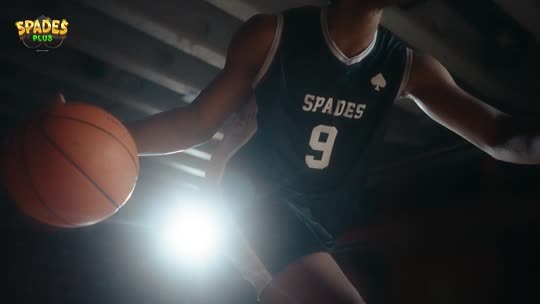 NBA Pro Gamer Moves Live Action A filmed live-action spot for Zynga's Spades Plus, built around a staged sports moment rather than gameplay capture. Watch in the showcase ↗
-
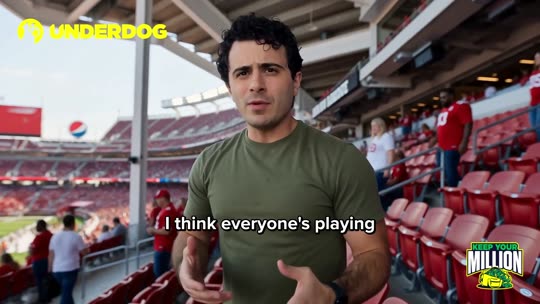 True Underdogs TV/CTV A presenter-led Underdog ad filmed in a stadium, with the app shown in hand, tagged for TV and CTV in our showcase. Watch in the showcase ↗
-
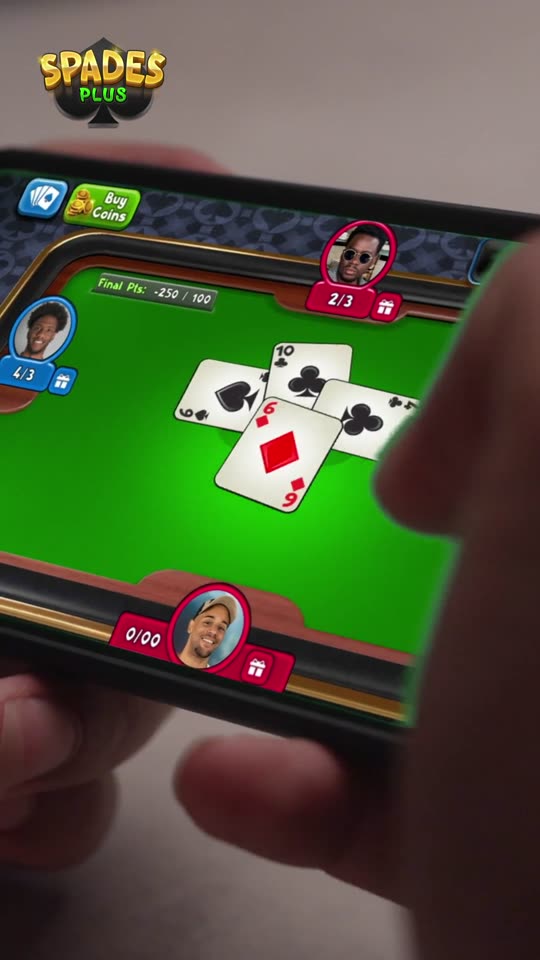 Five Minutes - CTV UGC (Studio) A Spades Plus piece cut for CTV: real players around a table, intercut with the game on a phone. Watch in the showcase ↗
-
 White House Alien Invasion Live Action A live-action Spades Plus concept that needs a set and a cast, the kind of idea UGC cannot stage. Watch in the showcase ↗
-
 Cafe Live Action A live-action ad for a Rollic casual puzzle game that puts the game into a staged real-world scene. Watch in the showcase ↗
-
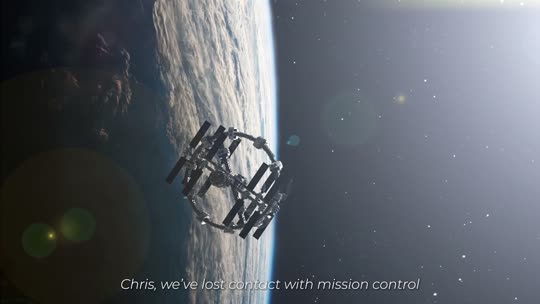 Astronaut Live Action A live-action Screw Jam piece for Zynga (Rollic), a casual title told through a filmed scenario. Watch in the showcase ↗
Read more
Questions people ask
Can a connected TV ad drive installs of a mobile game?
Yes. AppLovin added Wurl's CTV supply to AppDiscovery and sells it on a cost-per-install basis (AdExchanger, May 2023), and most measurement partners can attribute streaming ad exposures to later installs. The ad has to give the viewer a way to the phone, such as a QR code, a clear call to action and the app icon.
What specs does a CTV ad need?
It depends on the publisher, but expect 16:9 landscape, 15 or 30 seconds, audio required and a constant frame rate. MNTN, for example, asks for exactly 15 or 30 seconds at 1920x1080 or higher; Roku's 2021 spec sheet requires stereo audio at -23 integrated LUFS.
Can we reuse our TikTok ads on CTV?
Not as they are. TikTok-style ads are vertical and CTV wants 16:9 with mandatory sound. In our view it is better to plan the TV cut and the mobile cuts in the same shoot.
When is live action worth it over UGC?
Our view: when the idea needs a set, a cast or a staged moment, and when it will play on a TV screen. For a player talking to a player in the feed, UGC is usually the better and cheaper fit.
How do you measure installs from TV?
Through your MMP, which links CTV exposures to installs with cross-device matching, and with an incrementality read across the whole account, because last-touch attribution undercounts a channel that cannot be clicked.
Also under Gaming